As businesses and developers seek to build their presence online, VPS hosting has been quietly reshaping the game. Sitting between basic shared hosting and pricey dedicated servers, it provides users with a solid mix of performance and cost. This makes it a great choice for those who want reliability and make their digital ambitions possible.
What is VPS hosting?
VPS stands for Virtual Private Server. VPS hosting is taking center stage in the web hosting world, as it grants exclusive access to dedicated CPU, RAM, storage, and bandwidth. This allows websites and applications to perform smoothly, even under traffic spikes. Users can enjoy complete isolation and full root access to optimize and secure their servers exactly how they need.
How VPS hosting works?
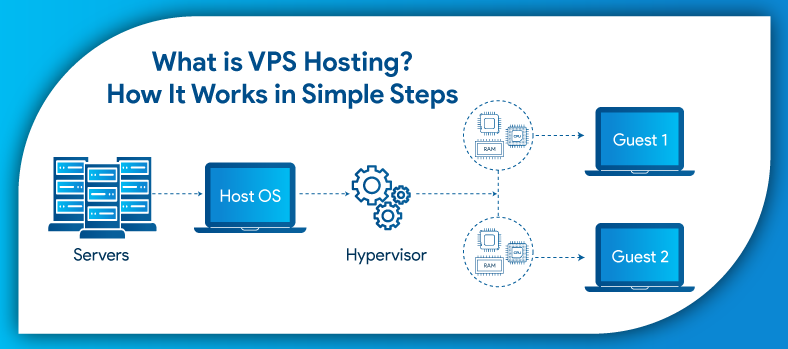
In this section, we explain how VPS hosting works. The working mechanism of VPS depends on the virtualization technology. The entire setup is managed by a hypervisor, which performs the role of allocating hardware resources and building isolation. Namely, there are two types of hypervisors. Among these, the Type 1 (bare-metal) are meant for enterprise-grade performance, while the Type 2 (hosted) are for smaller environments. The hypervisor divides a single physical server into multiple isolated virtual machines (VMs). And, each of these VPS operates independently given that it has its own dedicated resources, operating system, and applications. Be it the IP address, CPU, RAM, or storage, everything is distinctly available.
What are the types of virtual private server (VPS) hosting?
Here are the three types of VPS hosting, namely, managed, unmanaged, and semi-managed hosting.
What is a managed VPS?
When it comes to a managed VPS, the provider takes care of all technical tasks. Whether it pertains to server setup, maintenance, updates, backups, security, or monitoring, the provider handles everything. So, if your business needs to outsource technical expertise, it is a suitable choice. However, it limits user control and costs more than other VPS hosting.
What is an unmanaged VPS?
As the name suggests, an unmanaged or self-managed VPS gives user full control over the server. So, you can enjoy full root access, while the provider only takes care of the physical hardware and network. It is more cost-effective, and users need to take care of everything from installation, security, to troubleshooting.
What is Semi-managed VPS hosting?
If one needs a balance between the above two, then semi-managed VPS hosting comes in. So, while the providers take care of core server infrastructure, OS updates, and security patches, it is the user who manages apps and configurations. So, if you need both control and support, it is a good option for you.
Who provides the best VPS hosting?
In the marketplace, one of the top VPS hosting providers, ServerBasket, takes care of all your hosting needs. This is because ServerBasket gives you enterprise-grade infrastructure with a 99.995% uptime guarantee, that too at competitive prices. As it hosts the VPS servers in Tier IV data centers, you can stay assured about performance and security. Users can choose between Linux or Windows OS, and get 24/7 customer support along with the best deals. Adding to this, ServerBasket’s VPS hosting comes with DDoS protection, automated backups, high-speed 10Gbps connectivity, as well as unlimited bandwidth. These features make ServerBasket’s hosting one of the best VPS services for businesses.
VPS vs Shared Hosting vs Dedicated Hosting
VPS Hosting
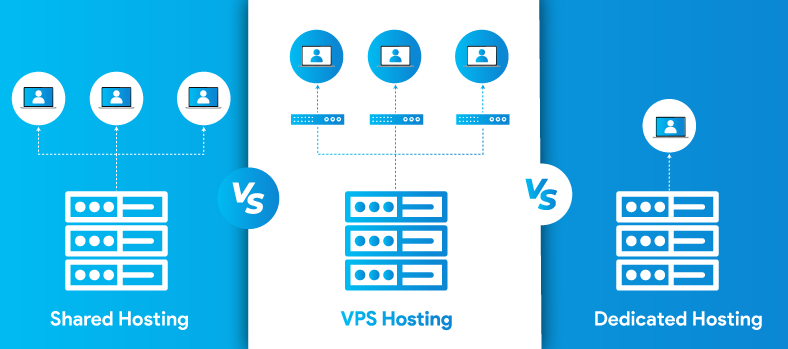
As discussed above, VPS hosting leverages virtualization as it divides a physical server into multiple VMs, each isolated from one another with dedicated resources. Its capabilities lie between shared and dedicated hosting. It is the best choice for SMBs, and gives you full root access and advanced security.
Shared Hosting
In terms of VPS vs shared hosting, the major factor lies in affordability. This is because shared hosting places multiple websites on one server and users need to share all resources. It is a beginner-friendly option, and the hosting provider manages it completely. However, security is weaker as compared to the other hosting types and performance can slow down if other sites use more resources.
Dedicated Hosting
If you need complete control over your entire server, then dedicated hosting is for you. It is the best fit for high-traffic websites, large eCommerce platforms, or enterprises that need exclusive hardware. Since users get full control, security is unmatched with total administrative control, although it is the most expensive among the three.
Key Benefits of VPS Hosting
Performance and Reliability
-
Dedicated Resources
Each VPS gives you guaranteed CPU cores, RAM, storage, and bandwidth. And, the VMs are isolated using a hypervisor, so that you can easily prevent “noisy neighbour” slowdowns. So, even during peak traffic, your site’s performance remains consistent.
-
Superior Speed
With VPS hosting, you are bound to enjoy faster load times (typically 0.5–2 seconds). This is because it comes with enterprise-grade SSD/NVMe storage, high-speed RAM, and customizable caching. You will not experience any resource contention and can expect an uptime of 99.995%.
Security
-
Full Isolation
As each of the VPS operates independently, it comes with its own file system and IP address. You can now enjoy kernel-level isolation, allowing you to prevent cross-site contamination exclusively.
-
Custom Security Option
VPS hosting comes with root access. So, as a user, you can deploy firewalls, intrusion detection systems, SSL certificates, and even leverage VPN-based administration. Along with this, you can also implement compliance-grade protections (GDPR, PCI-DSS, HIPAA) and equip it with custom access controls.
Control and Customization
-
Full Root Access
The entire administrative control remains in your hands in an unrestricted manner. Users of VPS hosting can install software, even manage services, and tweak the performance as and when needed.
-
Server Configuration
Users have the power to configure the server based on their needs. So, you can choose the OS, be it Windows or Linux. Apart from this, you can determine web servers, databases, and caching tools, and tailor the entire setup.
Scalability and Cost-Effectiveness
Scaling VPS hosting is a seamless task. You can scale resources effectively, be it CPU, RAM, storage, or bandwidth, immediately, so that there is no downtime. With this, you get 80–90% of dedicated server power at a fraction of the cost. It comes with growth-friendly pricing, enabling you to always aim towards growing.
What are ServerBasket VPS hosting services?
Managed/Unmanaged/Semi-managed VPS Hosting: Get the desired level of control and maintenance with your hosting
Cloud VPS Hosting: Enjoy scalable VPS solutions with instant resource upgrades and cloud storage integration in Tier-4 data centers.
Free VPS Trials: ServerBasket provides you with a risk-free evaluation period (7 days) to test our hosting before committing.
Linux VPS Hosting: Choose between multiple Linux distributions (Ubuntu, CentOS, Debian, AlmaLinux, Fedora).
Windows VPS Hosting: Opt for fully licensed Windows Server editions (2012–2025) with GUI-based management. Simultaneously, enjoy integration for Microsoft applications.
Control Panel Options: Get the desired support with cPanel (Linux), Plesk (Linux & Windows), or custom panels/SSH.
Backup & Recovery Services: We leverage automated server-side backups, with incremental/full snapshots, and disaster recovery options for data protection.
Advanced Security Infrastructure: Our hosting comes with multi-layer protection with firewalls, DDoS mitigation, IDS/IPS, and more.
24/7 Technical Support: Get round-the-clock assistance via live chat, email, or phone to troubleshoot issues immediately.
Global Data Center Network: We host our servers in tier-4 data centers across India, North America, Europe, Africa, and Asia-Pacific.
Enterprise-Grade Hardware & Infrastructure: We acquire servers from Fujitsu, HP, Dell, IBM, Lenovo, with SSD/NVMe storage for high-performance VPS environments.
Custom Resource Configurations: We tailor-fit the VPS servers with CPU, RAM, storage, and bandwidth allocations to match your end needs.
Additional Services: Apart from the above benefits, we provide free server migration, reseller hosting, and co-location options, along with zero setup fees for your VPS deployments.
Use Cases of VPS Hosting:
-
Website Hosting
With VPS hosting, you can enjoy smooth uptime even for your high-traffic websites.
-
Hosting Web Applications
VPS hosting is ideal for SaaS platforms, APIs, and CMSs. And, it is suitable for custom stacks, multiple database systems, and reliable app performance.
-
E-commerce Stores
VPS hosting allows you to leverage secure, PCI-compliant environments with dedicated resources to run your e-Commerce websites.
-
Game Server Hosting
Get the best resource isolation and low-latency connections with easy scaling for multiplayer games and tournaments.
-
Forex Trading Platforms
With VPS hosting, users can enjoy fast transaction execution with high uptime and VPN/RDP access for real-time trading.
-
Development and Testing Environments
VPS hosting allows smooth development workflows with isolated staging, QA, and production servers.
Conclusion:
So, those businesses that need to step onto the digital stage can leverage VPS hosting and scale their business. With ServerBasket’s VPS hosting, you can make your websites run faster, even during traffic surges, and dominate online.