What Are AI Agents? Types, Benefits & How They Work in 2026
AI is no longer limited to coding! In 2026, AI agents can plan, call tools, and complete complex tasks. Whether you are a marketer, programmer, or PM, these AI agents are moving from being a tool to a teammate.
Let us decode what AI agents are and how they can deliver real ROI!
What is an AI agent?
An AI agent is a self-directed program that can gauge their environment, make decisions, and take actions without needing any human intervention to achieve specific goals. They are like smart employees, to whom you can assign high-level goals.
Unlike ChatGPT, which only answers questions, an AI agent is like a personal assistant that can book flights, interpret data, and plan a vacation.
By definition, AI agents are autonomous AI-based software programs capable of gathering data, deciding a course of action, and performing tasks independently set for them by humans. They employ multiple software tools, learn from repetition, and improve continuously.
How does an AI agent work?
AI Agents operate through core loops consisting of three main steps, called the Sense-Think-Act Cycle:
Sense (Perception):
The agent gathers data from its environment using cameras, microphones, sensors, and API calls. Example: A self-driving car detects obstacles using cameras.
Think (Making-Decision):
The sensory input is processed at this stage using algorithms, ML models, etc., to analyse and make decisions about the best course of action. Example: The self-driving cars compute the safest speed and route based on the information gathered.
Act (Execution):
The agent now performs actions, moves, speaks, or sends signals based on the decisions made. Example: The car applies the brakes to avoid a crash.
This loop keeps repeating while the agents adapt dynamically to the changes by observing the result of this action, which is further fed back into the “Perception” step.
What are the benefits of using AI agents?
AI agents deserve a spot in your 2026 strategies if you want to make workflows faster, smarter, and more productive. They slash down costs and operate 24/7 to free human teams to focus on innovations.
-
Advance Decision-Making
AI agents drive smart data-enabled decisions by observing trends and patterns. They are transforming the way unstructured data is managed to optimize workflows. These autonomous agents process large datasets to streamline policies, evaluate risks, and help experts make faster decisions for high-value tasks.
-
Automation of Repetitive Tasks
The fully autonomous assistants automate repetitive tasks to execute them with speed and accuracy. They work 24/7, improving operational efficiency, saving hours, and boosting productivity. Integrate them in daily workflows to automate schedules, data entry, answer standard customer queries, and auto-generate reports.
-
Scalability and Business Growth
Operational needs increase when the business grows, and so does the need for scaling human resources. AI agents can be scaled easily by deploying more agents without changing much of the infrastructure. Agents can grow without the need for a proportional increase in operational costs.
-
Increased Productivity & Efficiency
AI agents save significant time and boost productivity. They work 24/7 and handle more tasks, letting teams handle more important interactions like upselling and complex issues. The always-on agents do not just suggest, but act, making context-aware decisions in the shortest time.
-
24/7 Availability and Monitoring
The AI agents are relentless. With persistent vigilance and 24/7 surveillance, they quickly identify threats and fix them. Their self-healing capabilities make business infrastructures highly resilient and significantly reduce operational costs.
Key Features of an Agent in AI
-
Autonomy
AI agents can be differentiated by their ability to act autonomously without the need for human oversight. Unlike traditional software, which is designed to follow instructions, AI agents go a step further and recognize the next action to be taken based on records and contextual understanding.
-
Action Execution
AI agents work to achieve the goals assigned to them. Their actions are oriented toward maximizing success by achieving a defined utility function or reaching specific performance metrics. They possess the intelligence to evaluate the consequences of their actions and continuously improve outcomes.
-
Reasoning & Planning
This cognitive process involves applying logic to reach conclusions, gauging implications, and solving problems. These rational entities analyze data, recognize patterns, and make evidence-based decisions. For example, cybersecurity agents gather data from third-party databases to study the latest security incidents and respond accordingly.
-
Proactiveness
AI agents leverage advanced analytical capabilities to anticipate outcomes. This predictive ability enables them to proactively prepare and offer optimized assistance for future scenarios. Autonomous warehouse robots can alert teams and rearrange stock in anticipation of high-traffic operations.
-
Tool & API Integration
Common tools allow agents to perform calculations and generate code, while APIs facilitate communication with other software systems. Agent logic manages model calls, selects appropriate tools, and combines multiple tools to execute complex tasks efficiently, expanding their operational capabilities.
-
Communication
AI agents communicate, coordinate, and cooperate with other agents and humans to accomplish goals. This includes negotiating tasks, sharing information, and collaborating across platforms. Their cross-platform compatibility enables seamless interaction with databases, management systems, and file operations.
-
Adaptability & Learning
These intelligent agents adapt their responses to changing circumstances, effectively handling uncertainty and dynamic environments. For instance, a stock trading bot can quickly adjust strategies during market volatility. Dynamic task reprioritization, workflow flexibility, and continuous performance optimization distinguish them from traditional automated systems.
What is different between AI agents, AI assistants, and AI Copilots?
| AI Agents | AI Assistants | AI Copilots | |
|---|---|---|---|
| Autonomy | Independent and fully autonomous | Responds only when prompted | Moderately autonomous; requires human guidance |
| Type of Interaction | Needs minimal human interaction after setup; completely goal-driven | Highly conversational; mostly responsive and reactive | Conversational and works with users in real time as they work |
| Decision Making | Takes independent decisions driven by goals | Offers suggestions; final decisions are made by the user | Offers suggestions; final decisions are made by the user |
| Control Levels | System-controlled toward achieving goals; user sets goals and the agent executes | Fully controlled by user prompts and instructions | User-controlled; approval required before execution |
| Critical Thinking | Handles complex situations using multi-step reasoning and outcome-driven planning | Limited reasoning mainly to answer questions | Thinks to support and enhance user decision-making |
| Learning | Continuously learns from the environment through feedback and outcomes | No self-directed learning; may improve through system updates | Learns from user feedback and interactions |
| Ethical Responsibility | Requires strong governance due to autonomous capabilities | Lower risk since actions depend entirely on users | Lower risk; influences user decisions but cannot control outcomes |
| Execution | Utilizes complex and robust infrastructure to execute tasks automatically | Executes only when directed | Remains in the loop by assisting rather than executing independently |
Different Types of Agents in AI
-
Simple Reflex Agents
Called the most fundamental type of AI agents, simple reflex agents are designed for speed and efficiency. They operate on pre-defined “if-then” rules and make decisions based entirely on the current situation, without memory, future goals, or past references. For example, a smart thermostat adjusts temperature based on real-time conditions.
-
Goal-Based Agents
Goal-based agents rely on stronger reasoning capabilities for decision-making. They use internal representations to evaluate their environment, analyze different possible approaches, and select the most efficient path to achieve a defined objective. This problem-solving capability gives them a strategic advantage. For example, autonomous vehicles navigate routes based on destination goals.
-
Learning Agents
A learning agent improves its performance by learning from past experiences. Using sensory inputs and feedback mechanisms, it continuously adapts to new data and evolving standards. Unlike rule-based systems, learning agents are not restricted to fixed programming but evolve their actions over time. Examples include Netflix or Amazon recommendation systems.
-
Hybrid Agents
Hybrid AI agents combine symbolic AI with machine learning to create intelligent, flexible, and reliable systems. By leveraging structured logic alongside data-driven learning, these agents reduce hallucinations and provide more trustworthy outputs. A common example is FinTech fraud detection systems that combine rule-based verification with behavioral pattern analysis.
-
Multi-Agent Systems
A multi-agent system consists of multiple autonomous agents operating within a shared environment. Without centralized control, these agents collaborate, coordinate, or compete to achieve both individual and collective objectives. For example, in recruitment processes, agents can autonomously handle outlining job requirements, screening candidates, ranking profiles, and recommending top applicants.
-
Model-Based Reflex Agents
Model-based reflex agents perceive the current environment using sensors and maintain an internal model of the world. They rely on stored knowledge and memory to interpret environmental changes and choose actions based on predefined models. For instance, a robotic vacuum cleaner senses obstacles and remembers previously cleaned areas to optimize cleaning paths.
Use Cases of Agents in AI
As 2026 sets in, AI agents seem to be catching a lot of traction. From executing routine tasks to enhancing decisions, AI agents are fuelling business productivity. They are no longer futuristic – let’s explore the applicability of these digital workers.
-
24/7 Customer Support
AI-powered customer support helpdesks efficiently handle common queries and troubleshoot issues in real time, escalating complex cases to human representatives when necessary. Unlike traditional AI systems, agentic AI adapts dynamically to new challenges by analyzing past interactions, learning continuously, and adjusting its approach to deliver improved resolutions.
-
Content Creation
AI agents support marketing teams by generating drafts, presenting research insights, and analyzing audience behavior to optimize digital content strategies. They assist with campaign creation, intelligent scheduling, content ideation, and performance analysis, enabling creators to focus on delivering their unique vision and creativity.
-
Supply Chain Optimization
AI agents streamline supply chain operations by rationalizing supplier selection, automating contracts and purchase orders, and ensuring accuracy in inventory and procurement management. Agentic AI delivers actionable insights, detailed spend analysis, and opportunity identification, helping organizations reduce costs and improve operational efficiency.
-
Financial Analytics
From customer billing and loan processing to fraud detection and credit risk assessment, AI agents enhance financial operations through automation and advanced analytics. They support algorithmic trading, auditing, credit evaluations, and financial reporting, reducing manual workloads while enabling data-driven financial decision-making.
-
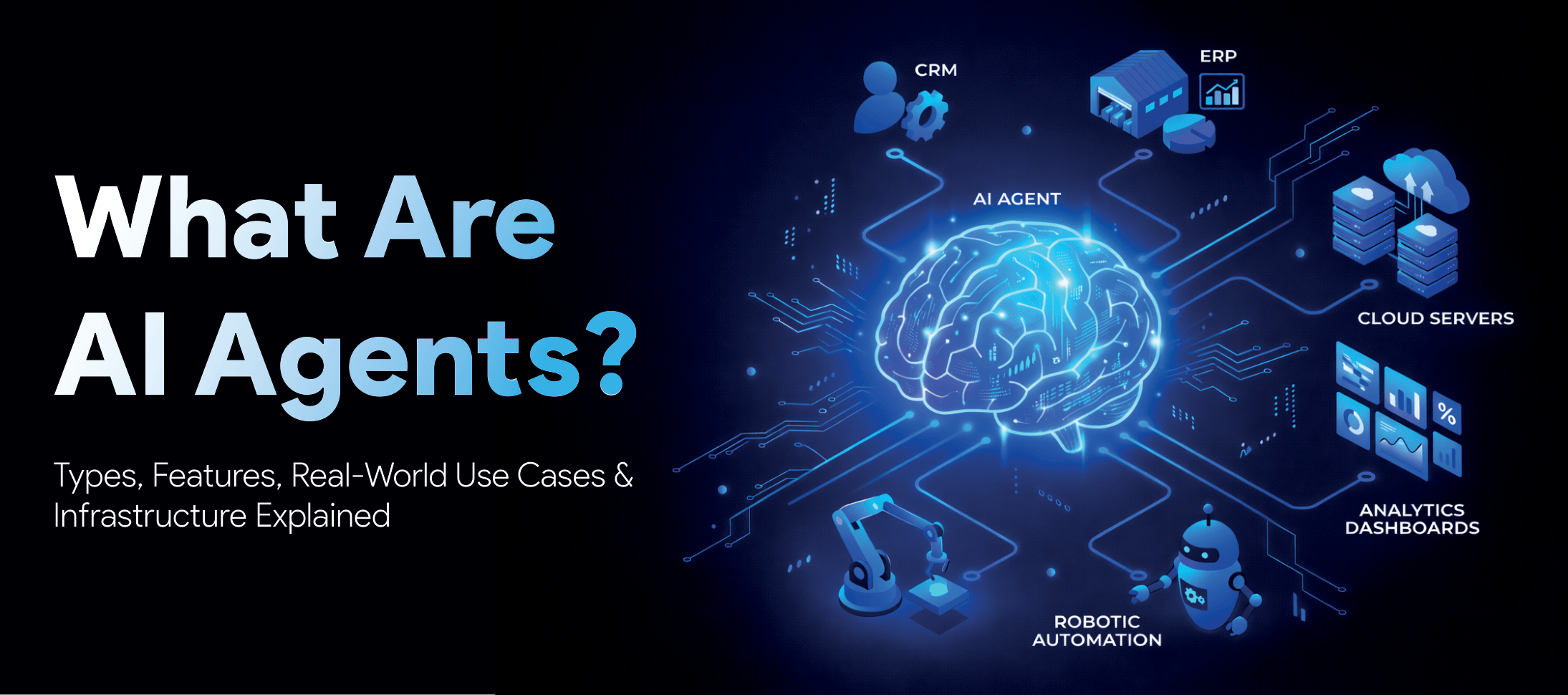
Data Synthesis (CRM & ERP)
AI agents integrated with CRM and ERP systems automate workflows and generate real-time insights for smarter business decisions. They auto-resolve service requests, bridge data silos, enable predictive analytics, and transform enterprise platforms into intelligent execution layers with proactive and optimized processes.
-
Energy Management
Modern autonomous AI agents analyze real-time energy consumption data to identify patterns and optimize systems such as HVAC, lighting, and manufacturing units. By improving efficiency, optimizing distribution, reducing operational costs, and supporting sustainability goals, they transform energy management from reactive monitoring to proactive optimization.
Servers Optimized for Running AI Agents and Autonomous Workloads:
AI agents will be mainstream soon. With it, the demand for powerful and scalable AI-optimized servers and infrastructure will rise. It makes sense to build the backbone now, with high-performance AI servers that support generative AI, deep learning, and big data processing. These are some of the best compute-intensive AI servers to date:
- Dell R750xa – This 2U, dual-socket server featuring 2 3rd Gen Intel Xeon Scalable processors has 40 cores and 32 DDR4 RDIMM slots. The state-of-the-art, GPU-dense server facilitates intense computational tasks for deploying AI agents.
- HPE DL380 Gen11 – Specifically designed with a focus on AI, this server is a great choice for AI agents and autonomous workloads. The massive GPU density, computing power, and edge-to-cloud security serve as a versatile foundation for simulations, inferencing, and real-time decision-making tasks.
- HPE DL385 Gen11 – The HPE ProLiant DL385 Gen11 is right-sized to address AI, edge computing, and data analytics, and is positioned as a premier, AI-optimized 2U server. They can handle high-performance agentic AI, autonomous workloads, and robotics with its AMD EPYC processors and powerful GPU acceleration.
- Lenovo ThinkSystem SR860 V4 systems – Lenovo ThinkSystem’s proprietary AI features go beyond GPU clusters to offer flexible configurations to facilitate dense AI, energy-efficient performance, and edge inference. Its comprehensive, AI-servers SR860 V4 systems and partnerships with NVIDIA and Intel cater to the evolving landscape of multi-agent systems.
Remember: Everyone will have agents sooner, but only those who are best prepared with the right infrastructure can harness its advantages responsibly!